
NewsNEWCENTER
Featured products
Contact Us
Points to Note When Selecting a Vacuum Pump
2026-10-27Nowadays, the advantages of vacuum pumps are widely recognised. As their characteristics have gained widespread acceptance, their usage is becoming increasingly common. To extend their service life, it is essential to carry out the necessary maintenance and servicing. Let us now take a look at the key considerations when selecting a vacuum pump.
When selecting a vacuum pump, the chosen model must be capable of efficiently extracting the various gases released during the process. In vacuum pump applications, the gas media can be highly diverse—including flammable, explosive, condensable, chemically reactive and corrosive gases—so the selected vacuum pump must be suitable for these conditions. For example, if a process generates large quantities of water vapour, the vacuum pump must be capable of extracting water vapour. The ultimate vacuum of the vacuum pump must exceed the vacuum level required by the production process by at least one order of magnitude, and the equipment must be suitable for operation within the required working vacuum range. The ultimate vacuum of a vacuum pump is the vacuum level that can be achieved when the pump’s pumping speed is zero. Therefore, to ensure the pumping speed of the vacuum pump within the working vacuum range, its ultimate vacuum must exceed the working vacuum level, and it must maintain a sufficiently high pumping speed throughout the required range.
The pumping speed of the vacuum pump must exceed the maximum outgassing rate of the process. To maintain the required vacuum level, when selecting a vacuum pump for a process involving continuous outgassing, the pumping speed of the vacuum pump or vacuum system must exceed the maximum outgassing rate of the process. If the system incorporates components such as cold traps or baffles, the effective pumping speed after the inclusion of these components must exceed the maximum outgassing rate of the process. If sudden, large-scale outgassing occurs during the process, the system’s effective pumping speed must be appropriately increased, typically to 2–3 times the maximum outgassing rate.
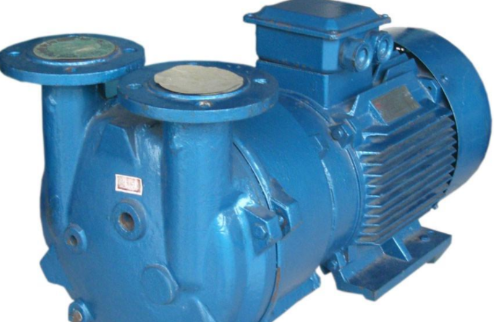
When selecting a vacuum pump, the working medium and construction materials must meet the process requirements. In applications such as the pharmaceutical, chemical and battery industries, the medium being pumped is often a corrosive gas; in such cases, the equipment must incorporate appropriate corrosion-resistant measures. For example, where acidic or alkaline gases are present, corresponding anti-corrosion coatings are required, or the pump material must be changed to corrosion-resistant stainless steel; where gases contain dust or particles, a dust collector or filter must be installed upstream of the pump inlet, or the pump itself must be designed to withstand such conditions.
Where continuous production is required, the selected vacuum pump must meet the demands of continuous operation. Where necessary, a standby vacuum pump with automatic switching capability should be installed to minimise production interruptions caused by unforeseen events. If the volume of gas being vented during the process gradually decreases, a maintenance pump may be installed to achieve energy savings and reduced consumption. During the vacuum pump selection process, where multiple pump types can simultaneously meet process requirements, an economic analysis of costs and operating expenses should be conducted to select a vacuum pump that offers good value for money, reliable operation, low maintenance requirements, and ease of use and servicing.
The above outlines key considerations regarding the selection of vacuum pumps. You may choose the appropriate method based on your actual operational requirements to avoid unnecessary losses caused by ill-informed decisions. Should you have any further queries, please visit our website, where we regularly update our articles; we hope you find them helpful.