
NewsNEWCENTER
Featured products
Contact Us
Water temperature requirements for water-ring vacuum pumps
2026-06-06As water ring vacuum pumps become increasingly common, their quality has also improved significantly. Due to their distinctive advantages, they are widely used. To help you make the best use of them, let’s take a look at the water temperature requirements for water-ring vacuum pumps.
When operating water-ring vacuum pumps, we often find that the longer they are in use, the more issues or faults arise, and the greater the number of factors affecting their performance. Water temperature is one such factor. If the water temperature is too high or too low, it will adversely affect the pump’s efficiency and may even shorten its service life. Excessively high water temperatures inevitably cause the water to vaporise, and the negative pressure operating conditions further exacerbate this process, resulting in an excessive build-up of water vapour within the pump housing. As the water ring vacuum pump draws in an excessive amount of water vapour during the intake phase whilst drawing in very little external gas, this leads to a very low system vacuum level. There are two primary factors contributing to excessively high water temperatures: firstly, the supply water temperature is too high; and secondly, the water heats up during operation.
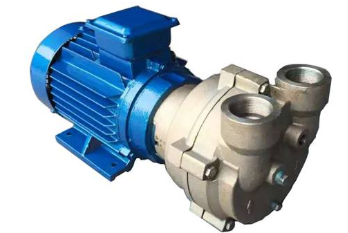
As water temperature is related to the intake volume, a higher working fluid temperature results in a gradual decrease in gas volume. As the temperature rises, the evaporation rate of the working fluid increases, occupying the original discharge volume and reducing the intake volume, which prolongs the vacuum pumping time. Furthermore, under vacuum conditions, the evaporation rate of the sealing fluid also increases; combined with the rise in temperature, the percentage of discharge volume occupied by the sealant grows, potentially leading to an inability to achieve a vacuum. As the data involved is too complex—with the evaporation rates of the sealing fluid varying significantly across different vacuum levels and temperatures—it is impossible to provide specific figures. Only by considering a specific vacuum level can one observe how temperature changes affect evaporation rates. During operation, it is essential to overlay the performance curves for temperature and vacuum against the pump’s performance curve to identify these relationships. Water temperature has a significant impact on water-ring vacuum pumps; temperatures that are either too high or too low will result in undesirable effects.
The above outlines the water temperature requirements for water ring vacuum pumps. We encourage you to familiarise yourself with this information; only by following the correct operating procedures during use can optimal results be achieved. Should you have any queries, please do not hesitate to contact us by telephone. We will provide appropriate advice based on your specific requirements to help you avoid unnecessary complications arising from improper operation.