
NewsNEWCENTER
Featured products
Contact Us
The main causes of air leakage in liquid-ring vacuum pumps
2026-07-23As the performance advantages of liquid-ring vacuum pumps are widely recognised, their use is becoming increasingly common. However, optimal results can only be achieved by strictly adhering to the operating instructions. To ensure better performance, let us now examine the main causes of air leaks in liquid-ring vacuum pumps.
In day-to-day industrial use, air leaks may occur when operating water-ring vacuum pumps. Tighten all connecting bolts on the pump and the packing gland, and securely wrap the joints where pipes, instruments and other components connect. Alternatively, replace the gaskets or packing. For air leaks, applying oil-lime or similar substances can serve as a temporary remedial measure. A misaligned bearing causes the impeller to be mounted at an angle within the pump casing. In the case of single-acting pumps, this results in uneven axial clearance. When the impeller rotates, part of it will inevitably rub against the end cover, causing scuffing to both the end cover and the impeller end face, which in turn increases the axial clearance. As gas from the compression chamber passes through this enlarged gap, a significant amount leaks into the suction chamber, reducing the vacuum level or discharge pressure. In such cases, the bearings of the liquid-ring vacuum pump must be removed for repair before being correctly reinstalled.
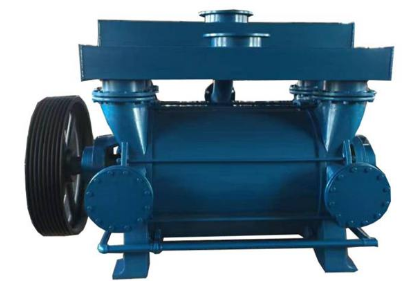
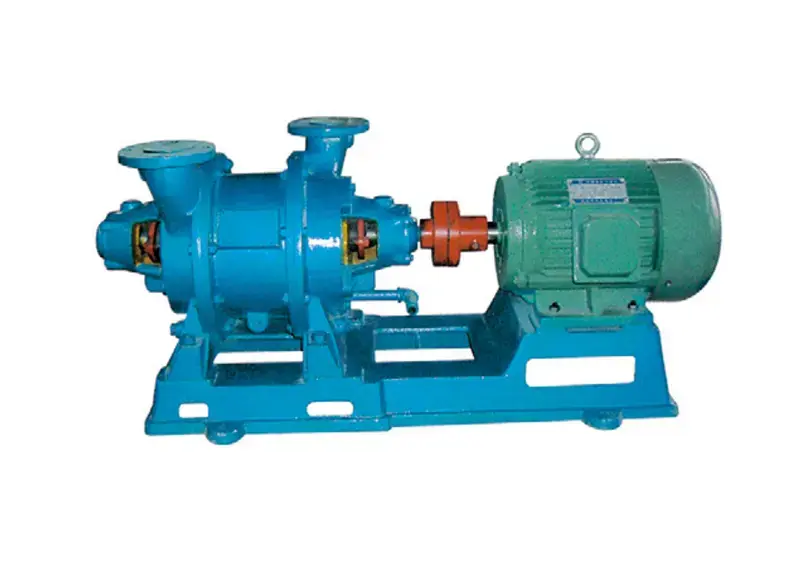
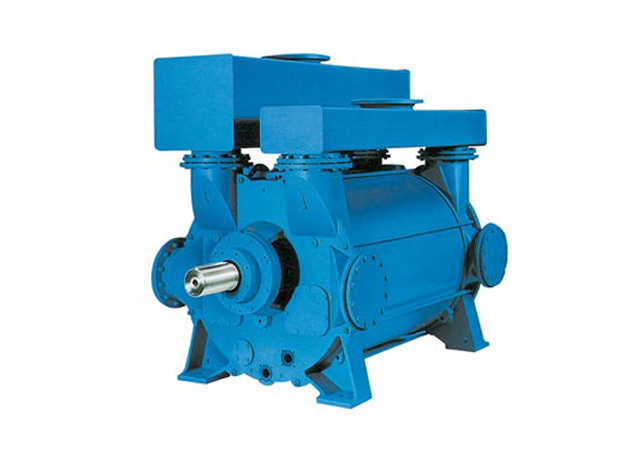
liquid-ring vacuum pump
If the front and rear end covers of a liquid-ring vacuum pump are not concentric—that is, if there is significant misalignment between them—the consequences are the same as those caused by misaligned bearings. As the temperature of the liquid ring rises, the saturated vapour pressure also increases, thereby reducing the vacuum level; however, this has no effect on the discharge pressure. There are several possible causes for the liquid ring of a liquid-ring vacuum pump to overheat. It may be due to the inlet liquid having a high temperature to begin with; it may also be caused by an insufficient supply of water or cooling liquid, preventing effective cooling and leading to a rise in the liquid ring temperature. Furthermore, friction between the impeller and the end covers may generate heat, causing the liquid ring temperature to rise, as may bearing overheating or prolonged pump operation.
The above outlines the main causes of air leakage in water-ring vacuum pumps. Given their high load-bearing capacity, consistent and reliable performance over the long term, excellent wear and weather resistance, and long service life, it is essential to ensure correct installation methods are followed during the installation process to avoid unnecessary complications.