
NewsNEWCENTER
Featured products
Contact Us
Safe Operating Procedures for Water-Ring Vacuum Pumps
2026-06-16Due to their advantageous characteristics, liquid ring vacuum pumps are widely used across various sectors, bringing considerable convenience to our daily lives. To ensure their optimal use, let us now explore the safe operating procedures for liquid ring vacuum pumps.
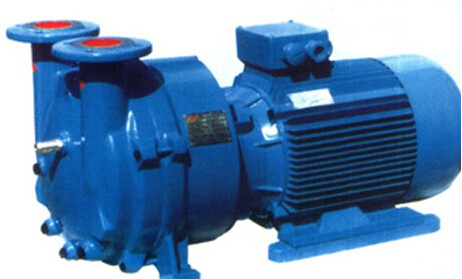
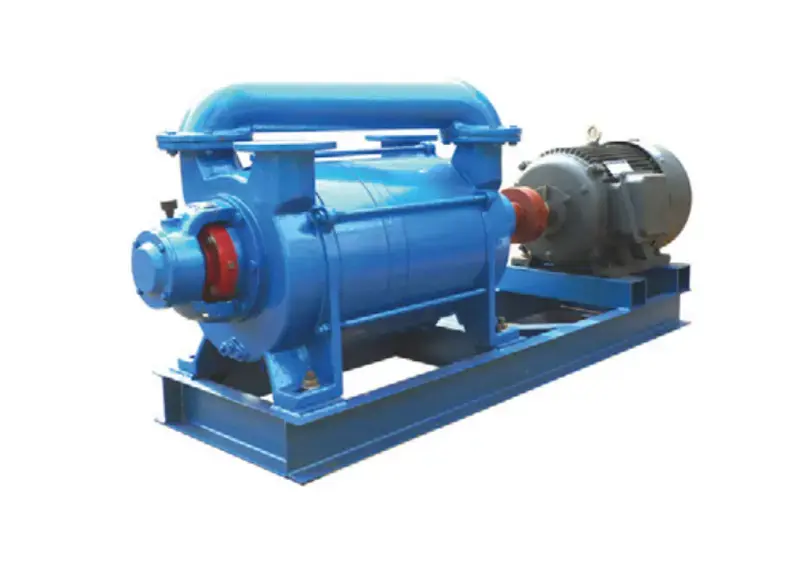
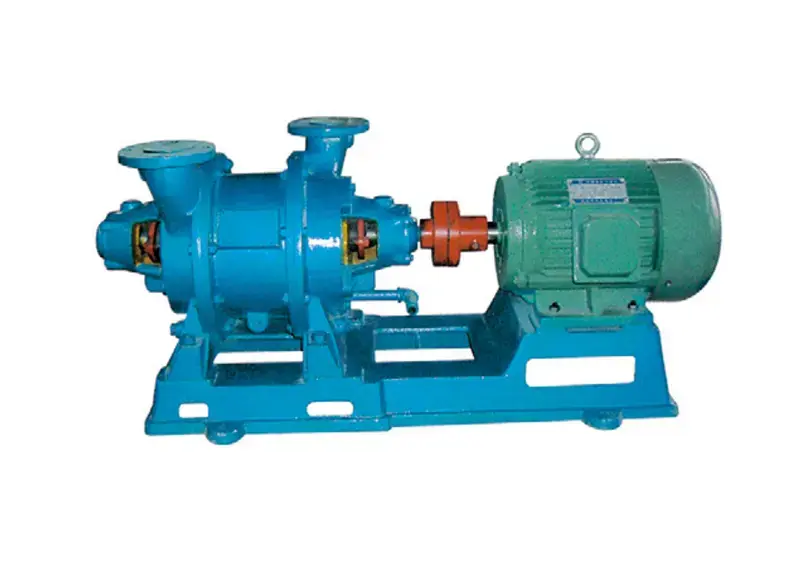
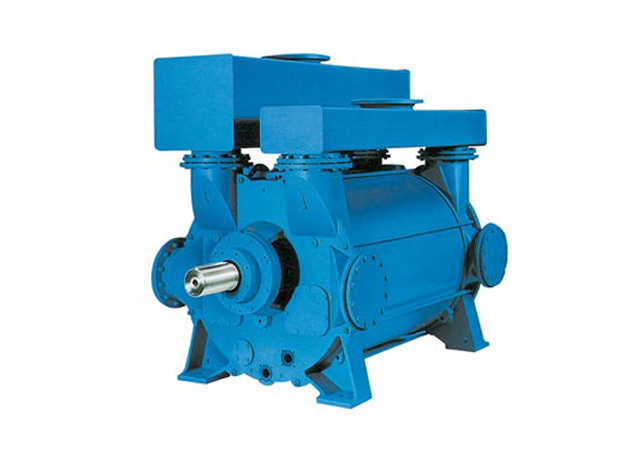
During operation of a liquid ring vacuum pump, centrifugal force causes the water to form a closed ring of approximately uniform thickness, the thickness of which is determined by the shape of the pump chamber. The upper inner surface is tangent to the impeller hub, whilst the lower inner surface is in contact with the impeller tips. A crescent-shaped space is formed between the impeller hub and the water ring; this space is divided by the impeller into several small chambers, each containing the same number of blades. If the top of the impeller is taken as the 0° reference point, before the impeller rotates 180°, the volume of the small chamber increases and communicates with the inlet port on the end face. At this point, gas is drawn in. When the suction process is complete, the small chamber is isolated from the inlet port. As the impeller continues to rotate, the volume of the small chambers decreases, causing the gas to be compressed. When the small chambers are connected to the exhaust port, the gas is expelled from the stainless steel vacuum pump.
The above outlines safe operating procedures for water-ring vacuum pumps. Please take note of these guidelines. During future use, it is essential to strictly adhere to the operating regulations to ensure high-quality performance and achieve optimal results. We hope this information proves helpful.