
NewsNEWCENTER
Featured products
Contact Us
Preventive Measures and Solutions for Cavitation in water-ring vacuum pump
2026-06-11As water-ring vacuum pumps become increasingly common, their quality has also improved significantly. Due to their distinctive advantages, they are now widely used. To help you make better use of them, let us take a look at the preventive measures and solutions for cavitation in water-ring vacuum pumps.
As the temperature of the cooling water rises, the pumping capacity of a water-ring vacuum pump is significantly reduced. The temperature of the sealing water must be kept below the saturation temperature corresponding to the discharge pressure; otherwise, vacuum performance will deteriorate and cavitation damage to the pump impeller may occur. Therefore, lowering the water temperature can prevent cavitation. During the selection phase, when determining the suction pressure and water temperature for a liquid ring vacuum pump, one should strive to avoid pressure ranges where the pump is prone to vapour erosion. In other words, the pump should not be operated in the critical vacuum or critical discharge pressure zones, thereby minimising the occurrence of vapour erosion.
Water-ring vacuum pumps are fitted with cavitation protection pipes. When bubbles generated during the compression process burst, high-pressure non-condensable gas is introduced from the outside to promptly fill the void created by the bursting bubbles. This significantly reduces cavitation damage to the pump and minimises the noise and vibration caused by cavitation. Some pumps are equipped with a cavitation protection port. When operating at ultimate pressure, opening the cavitation protection port (or connecting it to a vapour-liquid separator) can eliminate cavitation noise whilst ensuring optimal suction performance, thereby protecting the pump.
The function of the atmospheric ejector in a liquid ring vacuum pump is to utilise the pressure differential between atmospheric pressure and the vacuum pump to generate an air jet. This achieves a lower suction pressure within the ejector than that of the vacuum pump itself, thereby eliminating the vacuum pump’s ultimate pressure, preventing cavitation, and protecting the vacuum pump. As the atmospheric ejector is installed to prevent cavitation and protect the vacuum pump, vacuum pumps equipped with an atmospheric ejector generally achieve a superior vacuum level compared to those without one.
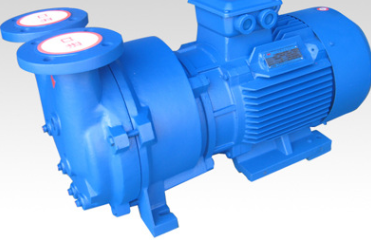
By replacing the working fluid of the water-ring vacuum pump from raw water to transformer oil, the ultimate vacuum level is significantly improved due to the low saturated vapour pressure of the oil. When removing heavily contaminated gases or in certain specialised applications, other liquids may also be used as the working fluid for water ring vacuum pumps (such as methanol, ethanol, xylene, aniline, acetone and other low-viscosity organic solvents); the ultimate vacuum level is determined by the saturated vapour pressure of the working fluid.
There are significant differences in corrosion resistance among the various materials used in water ring vacuum pumps. Many factors influence a material’s corrosion resistance; generally, materials with high hardness and elasticity exhibit greater resistance. Impeller coating is a common method, with non-metallic coatings typically comprising epoxy resin, nylon powder, polyurethane, and similar materials. Overlay welding or spray coating of alloys onto the flow path surfaces has also yielded positive results, such as the stainless steel electrode overlay welding method, the stainless steel plate inlay welding repair method, and alloy powder spray welding.
The above outlines preventive measures and solutions for cavitation in water-ring vacuum pumps. We encourage you to familiarise yourself with these guidelines; only by following correct operating procedures during use can optimal results be achieved. Should you have any queries, please do not hesitate to contact us. We will provide tailored advice based on your specific requirements to help you avoid unnecessary complications arising from improper operation.